


Revenues increase equity, while expenses reduce it, emphasizing the equation’s dynamic nature. This balance reflects the interconnected nature of financial transactions, preventing errors and omissions. In its most basic form, the accounting equation shows what a company owns, what a company owes, and what stake the owners have in the business. These are the resources that the company has to use in the future like cash, accounts receivable, equipment, and land. The totals after the first eight transactions indicate that the corporation the accounting equation is expressed as had assets of $17,200.
- You can automatically generate and send invoices using this accounting software.
- The purchase of its own stock for cash causes ASI’s assets to decrease by $100 and its stockholders’ equity to decrease by $100.
- It includes several steps, such as journalizing transactions, posting to the general ledger, preparing trial balances, and creating financial statements.
- Similarly, when a business issues new shares, both assets (cash) and equity increase.
- This is achieved through LiveCube, a ‘No Code’ platform, that replaces Excel and automates data fetching, modeling, analysis, and journal entry proposals.
- It’s the amount that would remain if the company liquidated all its assets and paid off all its debts.
Purchasing a Machine with Cash and Credit
Time value of money (TVM) refers to the concept that money available today is Cash Flow Management for Small Businesses worth more than the same amount in the future due to its earning potential. However, the accounting equation treats all values at face value regardless of when they are realized. This becomes problematic when dealing with long-term assets or liabilities. As a result of this transaction, the asset (cash) and owner’s equity (revenues) both increased by $9,000.
Liabilities: What a Business Owes
Creditors include people or entities the business owes money to, such as employees, government agencies, banks, and more. After the company formation, Speakers, Inc. needs to buy some bookkeeping equipment for installing speakers, so it purchases $20,000 of installation equipment from a manufacturer for cash. In this case, Speakers, Inc. uses its cash to buy another asset, so the asset account is decreased from the disbursement of cash and increased by the addition of installation equipment. Let’s take a look at the formation of a company to illustrate how the accounting equation works in a business situation. The equation applies universally—freelancers, small businesses, and enterprises all rely on it. In this comprehensive guide, we’ll define the accounting equation, explain how it works with real-world examples, explore its implications for financial health, and answer common questions.

Financial Statements
Equity can be Shareholders’ Equity, Stockholders’ Equity, or Owner’s Equity. Valid financial transactions always result in a balanced accounting equation which is the fundamental characteristic of double entry accounting (i.e., every debit has a corresponding credit). The equation is generally written with liabilities appearing before owner’s equity because creditors usually have to be repaid before investors in a bankruptcy. In this sense, the liabilities are considered more current than the equity.
Transaction Matching

It records the assets, liabilities, and owner’s equity of a business at a specific time. Just like the accounting equation, it shows us that total assets equal total liabilities and owner’s equity. Accounting equation describes that the total value of assets of a business entity is always equal to its liabilities plus owner’s equity. This equation is the foundation of modern double entry system of accounting being used by small proprietors to large multinational corporations.
- Understanding how to use this formula and other necessary basic accounting terms is crucial for finance professionals as it helps to verify the accuracy of records.
- Accrued liabilities are for goods and services that have been provided to the company, but for which no supplier invoice has yet been received.
- Every transaction affects at least two accounts to maintain balance—hence the “double” in double-entry.
- Ultimately, the accounting equation is an essential framework that provides a comprehensive view of a company’s financial landscape.
- In financial analysis, accounting equations serve as powerful tools to interpret a company’s financial health and decision-making pathways.
- This accuracy is essential for stakeholders who rely on these statements for decision-making.
In every transaction, debit and credit must always balance out to ensure the financial statements accurately reflect the company’s financial position. You can find a company’s assets, liabilities, and equity on a few key financial statements, including the balance sheet and the income statement. These financial statements give a quick overview of the company’s financial position.

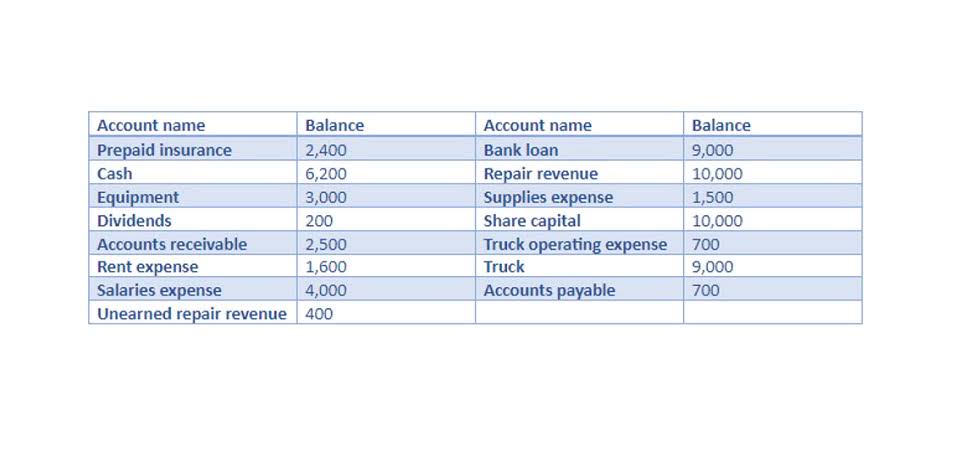
Current or short-term liabilities are employee payroll, invoices, utility, and supply expenses. Whether you’re just starting out or brushing up on accounting basics, mastering this equation is a must for sound financial management. Doesn’t Reflect Market ValueAssets are recorded at book value, not fair market value.